Home
Home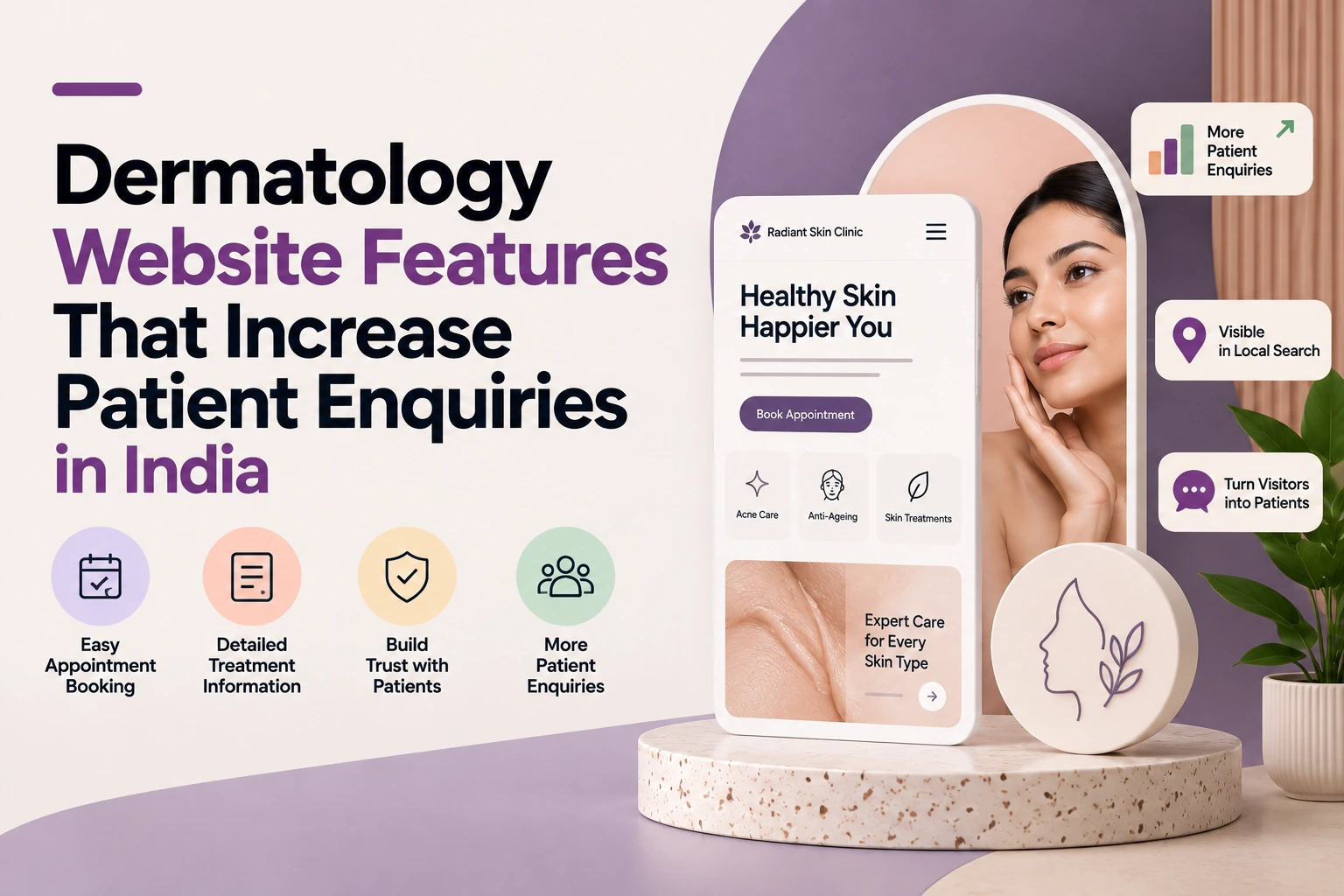
Most Indian dermatology clinic websites generate far fewer patient enquiries
than the traffic they receive warrants.
The average skin clinic website converts less than 2% of visitors into patient contacts.
The best-performing dermatology websites convert 10 to 18% of visitors —
a 5 to 9x difference in patient appointments from identical traffic volumes.
The difference is almost entirely attributable to specific website features —
elements that build trust with image-conscious Indian skin patients,
remove friction from the booking process,
and present clinical results so compellingly
that visitors take the next step rather than returning to Google.
This guide covers every website feature that measurably increases
patient enquiries for Indian dermatology clinics.
Feature 1 — Before/After Skin Results Gallery
The before/after gallery is the single highest-converting feature
on any Indian dermatology website.
Patients visit the gallery before reading any other page —
it answers their most important question in the most powerful way possible:
“Can this dermatologist actually deliver results for my skin condition?”
Gallery Structure for Maximum Conversion
- Minimum 50 cases: Organized by condition — Acne | Pigmentation | Laser | Hair | Anti-Ageing | Vitiligo
- Filter by condition: Patients browse only results relevant to their specific concern — increases time on page and booking intent
- Case details per result: Condition treated, number of sessions, treatment duration — makes results feel achievable and transparent
- Interactive slider: Before and after comparison on same photo — mobile swipe-friendly
- Consistent photo quality: Same lighting, angle, and distance — inconsistent photos reduce perceived credibility
- WhatsApp CTA after every 6 to 8 photos: “Get Similar Results — Book Free Skin Consultation via WhatsApp” — captures patients at peak interest
- Consent statement: “All results shared with written patient permission” — ethical credibility
Indian Skin Context in Gallery
- Showcase results specifically on Indian skin tones — Fitzpatrick type IV and V
- Patients with similar skin tones seeing results build stronger personal connection
- Pigmentation and acne results on Indian skin are more persuasive than results on fair European skin
Feature 2 — WhatsApp Booking Button — Always Visible
WhatsApp is India’s most preferred method for booking dermatology appointments —
particularly for skin conditions patients find sensitive to discuss by phone
with a receptionist they have never met.
- Fixed mobile button: WhatsApp icon fixed at the bottom of every mobile page — visible regardless of scroll position
- Pre-filled message: Button links to WhatsApp with message “Hi, I would like to book a skin consultation at [Clinic Name]” — removes all friction
- WhatsApp green color: Familiar brand color increases tap rate — do not change to clinic brand color
- Multiple placements: Homepage hero, after gallery, every treatment page, contact page — never more than one scroll away
- CTA text: “Book Free Skin Consultation” — action-oriented, benefit-clear
- Privacy assurance near button: “Private and confidential” — addresses sensitivity concern for skin conditions
Feature 3 — Condition-Specific Landing Pages
Generic “we treat all skin conditions” pages convert poorly.
Patients searching for acne treatment want a page about acne treatment —
not a general dermatology overview.
Condition-specific pages convert 3 to 5x better than generic service pages.
Essential Condition Pages for Indian Dermatology Websites
- Acne and Acne Scars: Most searched Indian skin condition — dedicated comprehensive page
- Pigmentation and Dark Spots: Extremely common Indian concern — melasma, post-inflammatory hyperpigmentation, suntan
- Hair Loss: Male and female pattern hair loss, alopecia, PRP treatment
- Laser Hair Removal: Most searched cosmetic dermatology procedure in India
- Anti-Ageing: Botox, fillers, chemical peel, skin tightening for urban Indian patients 30+
- Vitiligo: Significant Indian patient population — comprehensive treatment page builds trust with long-suffering patients
- Psoriasis: Chronic condition requiring expert management — detailed page attracts long-term patients
What Each Condition Page Must Include
- Condition overview written for Indian patients — Indian skin context, Indian climate factors
- Treatment options at the clinic — not generic treatment list
- Approximate cost range in Indian rupees
- Before/after results specific to that condition
- FAQ section: 8 patient questions about that specific condition
- WhatsApp booking CTA: “Book Free [Condition] Consultation”
- Treatment timeline: “Expect visible improvement in [X] sessions over [X] weeks”
Feature 4 — Treatment Cost Information
“Laser hair removal cost India” is one of the most searched dermatology queries.
Indian patients research treatment costs extensively before contacting any clinic.
Websites that show cost information capture these high-intent researchers;
websites without pricing lose them to competitors who are transparent.
- Approximate cost ranges: “Laser hair removal: ₹2,500 to ₹8,000 per session | Full body package from ₹45,000”
- Why costs vary: Treatment area, skin type, laser technology, sessions required — educates and manages expectations
- Session package pricing: Per session vs package price — shows value of committing to full treatment
- EMI options: “All treatments available on easy EMI — starting ₹X/month” — increases affordability perception
- Free consultation CTA: “Get an exact quote for your specific skin concern — Book Free Assessment via WhatsApp”
- Cost page SEO: A dedicated “Treatment Cost” page ranks for the highest-volume dermatology cost searches
Feature 5 — Doctor Profile With Full Dermatology Credentials
- Professional photo: In clinical setting, approachable — patients choose a person, not a logo
- Full qualifications: MBBS, MD (Dermatology), DVD — with awarding institution and year
- Medical Council registration: Registration number prominently displayed — legal trust signal
- IADVL membership: Indian Association of Dermatologists membership badge
- Experience metrics: “12 years | 6,000+ patients treated | 500+ laser procedures”
- Subspecialty: Cosmetic dermatology, trichology, laser dermatology — helps patients find right specialist
- Personal approach statement: “My approach to skin health” in doctor’s own words — human connection
Feature 6 — Patient Video Testimonials
Video testimonials are the most powerful trust builder on any dermatology website.
A real acne patient describing 5 years of struggling, their experience at the clinic,
and showing their cleared skin — converts anxious skin patients
more effectively than any clinical description or static before/after.
- Minimum 6 to 8 patient videos — representing different conditions treated
- 30 to 90 seconds per video — long enough to build trust, short enough to watch fully
- Patient speaks naturally — unscripted testimonials feel authentic
- Subtitles on all videos — Indian mobile users frequently watch without sound
- Condition identified clearly — “I had cystic acne for 7 years before coming to Dr. [Name]”
- Homepage placement: one video testimonial in first scroll — highest conversion placement
- Organized by condition: acne testimonials, hair loss testimonials — helps patients self-identify
Feature 7 — Technology and Equipment Showcase
Indian dermatology patients increasingly research clinic technology before booking —
particularly for cosmetic procedures where technology quality
directly affects treatment comfort and outcomes.
- Laser equipment: Q-switch laser, diode laser, fractional CO2 — brand names and applications
- Diagnostic tools: dermatoscope, Wood’s lamp, trichoscope — signals thorough diagnostic approach
- FDA/CDSCO approval mentions: regulatory approval signals safety for cosmetic procedures
- Equipment photos: actual laser machines, not stock photos — authenticity matters
- Patient-friendly descriptions: what each technology means for comfort and results — not technical specifications
Feature 8 — Indian Skin Specific Content
A dermatology website that speaks specifically to Indian skin concerns
converts significantly better than generic international dermatology content
repurposed for Indian audiences.
- Skin tone inclusivity: Show results on Fitzpatrick type IV, V, and VI skin — the reality of most Indian patients
- Indian climate context: Sun exposure, humidity, pollution effects on Indian skin — highly relevant, locally specific
- Common Indian concerns: Pigmentation, post-inflammatory hyperpigmentation, tan removal — specific to Indian patients
- Indian ingredient awareness: Patients familiar with turmeric, neem, besan home remedies — acknowledge and contrast with medical treatment
- Seasonal guidance: Monsoon skin care, summer sun protection, Holi color removal — Indian seasonal relevance
Feature 9 — FAQ Sections on Every Page
- 8 to 10 questions per condition or treatment page
- Common questions: “Is [treatment] painful?”, “How many sessions do I need?”, “What is the cost?”, “Is it safe for Indian skin?”, “What is the recovery time?”
- FAQ schema markup: enables People Also Ask appearances in Google — increases organic traffic
- Expandable accordion format: patients scan relevant questions without excessive scrolling
- WhatsApp CTA after FAQ: “Have more questions? WhatsApp our dermatologist directly”
Feature 10 — Skin Health Blog
A regularly updated skin health blog builds SEO authority and patient trust simultaneously —
each post targeting high-volume patient search queries
while demonstrating clinical expertise that converts readers to patients.
- Publish 2 posts per month consistently — builds compounding organic traffic
- Topics: acne treatment guides, sunscreen recommendations for Indian skin, pigmentation causes, laser FAQ
- Internal links in every post: to relevant treatment pages with booking CTAs
- Author attribution: “Written by Dr. [Name], MD Dermatology” — E-E-A-T signal for Google
- Each post: minimum 1,500 words, FAQ section, before/after results if relevant
For a complete guide on building a converting dermatology website in India,
see our article on dermatology clinic website design.
For driving traffic to your optimized dermatology website through SEO,
see our complete dermatology SEO guide for Indian skin clinics.
Conclusion
A dermatology website that consistently generates patient enquiries in India
is built around the psychology of image-conscious Indian skin patients —
visual proof of results, clinical expertise, transparent pricing,
frictionless WhatsApp booking, and Indian-skin-specific content.
Implement these 10 features systematically —
starting with the before/after gallery and WhatsApp button
as the two highest-impact elements —
and measure improvement in enquiry rate, WhatsApp contacts,
and new patient bookings month over month.
Call To Action
Want a high-converting dermatology website built for your skin clinic?
Get a free dermatology website audit today — we identify which features your current skin clinic website is missing and build the conversion elements that fill dermatology appointment books.
Or contact us on WhatsApp to discuss your dermatology website requirements.
Frequently Asked Questions
What is the most important feature on an Indian dermatology website?
The before/after skin results gallery is the single most important conversion feature on any Indian dermatology website. Patients visit the gallery before any other page to assess clinical quality and results achievability. A comprehensive gallery with 50+ cases organized by condition — acne, pigmentation, laser, hair — converts significantly more visitors into enquiries than any other website element. The WhatsApp booking button is the second most critical feature.
Should dermatology websites show treatment costs in India?
Yes — showing approximate cost ranges significantly increases patient enquiries. Indian patients research cosmetic dermatology costs extensively before contacting clinics. A website showing “Laser hair removal: ₹2,500 to ₹8,000 per session | EMI available” captures cost-researching patients who would otherwise leave to find pricing on a competitor’s website. Cost transparency builds trust and pre-qualifies patients for genuine consultations.
How important is WhatsApp integration on a dermatology website in India?
Extremely important — WhatsApp is India’s preferred booking method for dermatology appointments, particularly for sensitive skin conditions. A fixed WhatsApp button always visible at the bottom of mobile screens converts 4 to 6x more visitors than contact forms alone. The pre-filled message feature removes friction further — one tap starts the booking conversation. Most Indian dermatology clinics with prominent WhatsApp booking report it as their primary patient enquiry channel.
Do video testimonials increase dermatology patient enquiries?
Yes — video testimonials are the highest-converting trust element on dermatology websites. A real patient describing years of skin struggle and showing their transformation converts anxious skin patients more effectively than any before/after photo or clinical text. Dermatology clinics adding 6 to 8 genuine patient testimonial videos typically see 25 to 45% increase in website enquiry conversion rate — the single highest-ROI content addition for any skin clinic website.
Why should Indian dermatology websites have condition-specific pages?
Condition-specific pages convert 3 to 5x better than generic service pages. A patient searching “acne treatment in [city]” who lands on a dedicated acne page — with Indian skin context, treatment options, cost ranges, acne before/after results, and acne FAQ — converts significantly more often than one who lands on a generic “we treat skin conditions” page. Condition pages also rank better on Google — each targeting specific high-volume patient search queries.
What Indian skin specific content should dermatology websites include?
Include: before/after results specifically on Indian skin tones (Fitzpatrick IV-VI), content addressing Indian climate factors (sun exposure, humidity, pollution), common Indian skin concerns (post-inflammatory hyperpigmentation, melasma from sun, tan removal), seasonal skin guidance (monsoon skin care, summer sun protection), and acknowledgment of Indian home remedy culture (“here is why medical treatment works better than home remedies for [condition]”). Indian-specific content converts Indian patients significantly better than generic international dermatology content.
How many before/after photos should a dermatology website have?
Minimum 50 before/after cases for a comprehensive gallery that converts effectively. Organize by condition — acne gallery, pigmentation gallery, laser gallery, hair loss gallery — so patients browse only cases relevant to their concern. Add a new case weekly as treatments are completed. Quality matters as much as quantity — consistent lighting, angles, and photo format makes results look more credible. Always display written patient consent statement alongside the gallery.
How does a skin health blog help a dermatology clinic get more patients?
A regularly updated skin health blog generates two complementary benefits. First, each blog post targeting a high-volume patient search query (“best acne treatment India”, “laser hair removal cost [city]”) ranks on Google and drives free organic traffic from patients researching their skin concern. Second, blog content demonstrates clinical expertise — patients who read educational content from a dermatologist are significantly more likely to book a consultation with that doctor than with an unknown competitor.